Exposição
Opening of the virtual exhibition Ocupa CCVM 2020/2021 - Collective Exhibition Desmanche
20 April to 31 August 2021
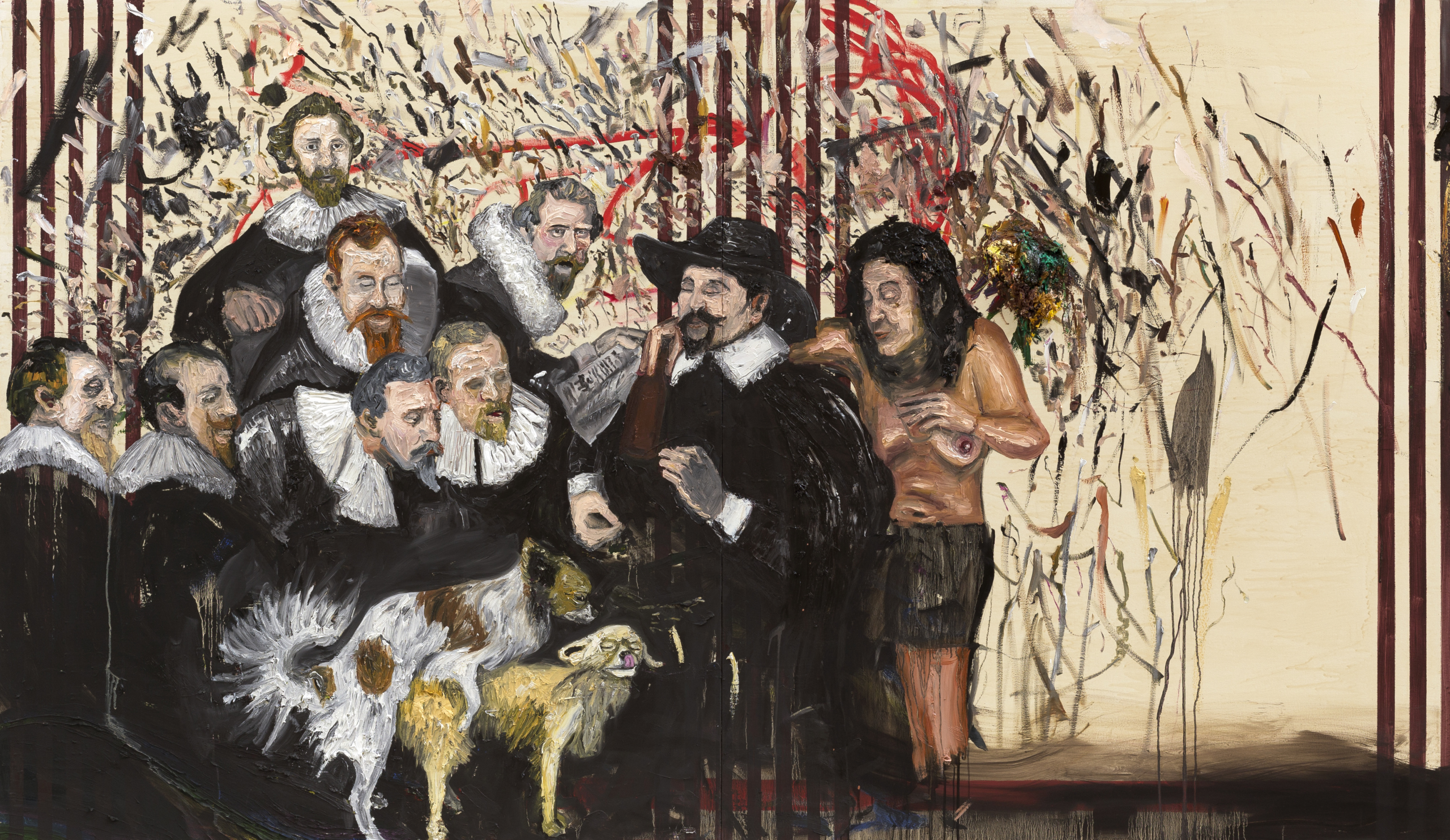 The Vale Maranhão Cultural Center – CCVM opens for virtual visitation as of today, 20, the Desmanche exhibition, which features 33 works of 11 Brazilian artists. Curated by Gabriel Gutierrez, the exhibition is guided by the human possibility of reinvention and subversion of established realities, through artistic making. Locating the concept of dismantling as a creative device, the exhibition invites the public to reflect on the current moment of crisis and the need for new horizons for a reorganization of the system. In view of the proposals submitted by the artists, we identified a desire to deal with the spheres of common life, the return to use and a new order for things. We live in difficult and uncertain times, in which many of the given situations that we know, no longer make sense. At the same time, we perceive a gap for reinvention, meaning and reordering of life. It is a space to be occupied by broad and shared art making. Deconstructing and building are sides of the same coin that, when thrown into the air, falls into our hands. The exhibition is an invitation to accept this game, comments Gabriel. Works by artists from Maranhão comprise the exhibition Três Maranhenses are part of the selection of artists who will have their works exhibited: Marcos Ferreira, João Almeida and Wilka Sales . The artist from Grajaú (MA) uses audiovisual resources to promote her artistic interventions. “The Trigger Voice and Smoke Signals performances were produced when social isolation intensified and influenced my creative processes. In them, the available audiovisual tools are improvised from investigations about body, memory and place, expanding the field of experimentation and using intuition as a method in art research”, explains Wilka, who is a veteran of the approvals in the Occupy CCVM notice, being this your third selection. João Almeida takes the work Tecitura do eu to Desmanche. Composed of an installation and a video-performance, it deals with the artist's identity recognition and affective memories that relate to his family and childhood. “ There is in each element of the work the affirmation of my creation processes perceived since I was a child and of the learning relationships obtained with the handicrafts of my parents and grandparents. I retrace a trajectory, I get rid of furs, I weave and unravel lines to recognize myself and also establish who I am, without losing the awareness of an experience in constant construction”, says João, who is in his 5th exhibition as a visual artist. Closing the trio of Maranhenses, the visual artist and set designer Marcos Ferreira is the guest of this edition of Ocupa CCVM. His work, Armadilha, is made of crochet and was produced during the period of social isolation. “Crochet made it possible to see time in a different way, being able, even if minimally, to disconnect from the outside and open the mind to learn even more about the technique”. Marcos' work is designed to provoke in the public the sensation of being attracted by the installation, due to the bright colors and geometric shapes chosen, which imitate webs. “Occup CCVM provides exposure to my work at a national level, having visibility and enabling new accesses. It's a way of fostering local artistic creation, in addition to stimulating thinking and experimenting with new techniques and materials”, he says. Six hundred snakes made of fabric make up the installation The Bahian artist Ieda Oliveira presents three works: the installation Snake's Nest and the videos Pedra False and Com a Cabeça nos Colunas. The works start from supports, materials and objects of everyday use, as a source of a poetic visual construction centered on the connection between image and word. Snake's Nest is made up of 600 cloth snakes and was inspired by the popular saying about environments with mean people. “The relevance of this installation lies in establishing this link with popular culture and contemporary art. As an artist channeling experiences, I understood that the game in the broad sense of the word permeates all my work and creative process with objects and words, and that, in addition to playing with their meaning, behaviors, relationships and actions are present in my process of creating”, says Ieda. Ieda is joined by Brazilian artist Camila Soato , winner of the PIPA award for Best Exhibition in 2013. Camila presents 3 paintings in oil on canvas, which are part of the Arregaça: the myth of being peaceful project . Created together with its producer, Gabriela Rodrigues, the project is guided by a desire to record the history of both, from the perspective of their experiences as women. “In a mocking and slavish way, I propose a game with appropriate images from the internet, associated with self-portraits taken in somewhat unusual situations. We try to show a different aspect of what was made invisible by the patriarchal history in which we are immersed”, explains the artist. With the project, Camila opens a reflection on issues involving micropolitics, sexuality, identity, gender and historical hegemony. Series of indigenous photographs are highlighted Amazonian photographer Paulo Desana exhibits the unprecedented series 'Pamürimasa (The Spirits of Transformation)' . The artist contrasts themes such as tradition, culture, art, technology and contemporaneity, using photography and lighting resources to reveal a new approach to the indigenous cosmogony of his ethnicity. The photographs are inspired by the myth of the Cobra-Canoe da Transformação journey – or, in Tukano language, Pamürɨmasa – and were created from traditional graphic paintings of the bodies and faces of shamans, healers and artisans, in addition to the graphics of handicrafts, instruments of blessings and other items from the Rio Negro ethnic groups. Tales Frey integrates Desmanche with the video Estar a par: step by step, in which he presents two pairs of shoes glued together, allowing objects to take on a new configuration. With the object's pre-defined function unable to be exercised, the bodies now connected gain the opportunity to share playful experiences. The duo Marcelo Muniz and Cadós Sanchez are exhibiting two installations: Crank 1 and Crank 2, which reproduce sound experiences through the use of everyday materials such as can openers and mechanical orange peelers. When the cranks are turned, sounds are produced mechanically and electronically, and amplified in space. Junior Suci, from São Paulo, presents the work Feito à Mão , using graphite on paper, and the video installation O Homem Pensa because He has Hands. The works are part of the À Mão Livre series, in which the artist explores the antagonism between manual work and mechanical reproduction, in techniques developed by human beings over time. João Angelini takes to Desmanche the work Laissez-faire N° 1 , part of a research in which the artist investigates the gesture of the hands of a policeman from Planaltina (MG), performing the routine of maintenance of his weapon before starting the day of work. By drawing only the hands, Angelini highlights the specific movement of the action, and does not restrict the work to the video format, exposing the 1800 drawings used in the production of animation. The choice allows the audience to visualize the filmic experience of the process and have a spatial experience of the work, in addition to the visual one. The exhibition can be visited virtually on the website of the Centro Cultural Vale Maranhão ( www.ccv-ma.org.br ). In addition to Desmanche, the virtual exhibitions O Maranhão by Pierre Verger and Afresco de Autumn are also on display.